|
 |
Western Culture - History & Fallout
In this section of these Rough Guides, I am taking a critical look at our Western cultural norms, focussing on the false notions that the image of the West projected by our media and politicians encourages us Westerners to accept about ourselves and our role in the world.
I believe a gradual, perceptible transformation of these false notions is under way, in Western culture. For example, we are becoming more aware that there are other points of view, besides our own, from which to look at the history of the past 500 - 1,000 years, say. In individual, personal terms, this could be called becoming more self-aware, and such acceptance of other points of view as being valid makes all the difference, not only to how we as individuals, but also to how the larger groups we belong to think and behave towards others. Improving Attitudes
Rant Warning 1 In their day, the attitudes we now refer to as racist, sexist and homophobic were generally accepted assumptions - rationalisations of oppression - that served our Western forebears well. Their conviction of their own superiority must have helped white (heterosexual) men to live with themselves while they were lording it over everyone else. The delusion that the powerful subjugate others 'for their own good' is not new. (Rudyard Kipling was more honest than most about the 'white man's burden', and has been pilloried as an imperialist for his lack of discretion, as if he was the only one.) Now that the colonial era has passed, the self-deceptions that justified slavery and Empire have become discredited; and so these previously 'normal' attittudes have been given names which brand them as unacceptable in our usage - that is, in our current cultural space.
These days, there are fewer places in our culture for these old attitudes of assumed white male superiority to hide. But it is not that long since they were ousted. They were still dominant in the 1970s - if you don't believe me, just listen to old British radio comedy! Like what happens in an individual life, when reality is admitted, ego's fantasies and strategies are undermined. As we let our bubbles of delusion float off, our capacity for awareness increases, both 'out-the-way' and in-the-way.
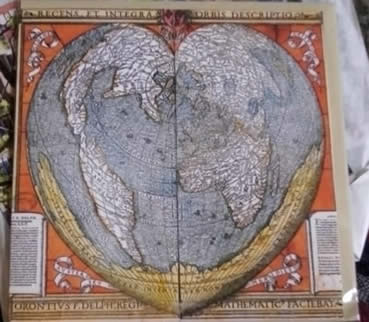
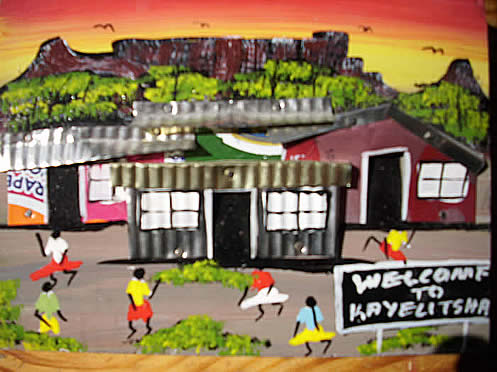
Cape Town (think about the glove) I think we in the West are beginning to acknowledge the less than happy nature of our behaviour towards other peoples over the past few centuries - the not so glorious, true story of our rise to world dominance. I like to think that our collective self-image boosting and denial are at last starting to dissolve. Based on my own first hand experience of what happens when defences are dismantled, and ego is unmasked, if this is now happening in our culture, we should stand by for a backlash or ten! Who's Normal? Who's 'Cultural'?
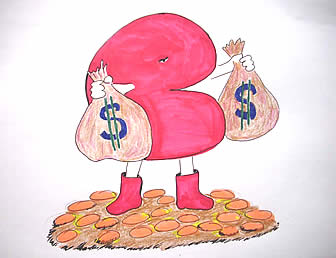
hobby horse 2 However, in spite of all the above, we Westerners have not yet managed to rid ourselves of our colonial attitudes, or cultural superiority syndrom, towards the rest of the world. We still tend to regard our way of doing things - our political and educational systems, our science, our agriculture, our very values - as normative, and representing 'modernity'. And therefore we expect everyone else to want to be like us, since we are, we believe, more ‘advanced’ or ‘developed’ than other peoples and their cultures. It goes without saying. (It is only quite recently, since the late 1960s, that our academics – our anthropologists and sociologists, at least - have even noticed we have a culture!)
There is an old established tendency in human history for the dominant group to see itself as normal and central, and to disregard and/or denigrate other groups it has conquered, or ‘superseded’. The Romans surely did it, as have the Japanese, more recently, in ‘their’ part of the world.
Likewise, in a British context, the English have tended to think of themselves as ‘normal’, and culture-neutral, and looked at their Scots, Irish and Welsh neighbours as having ‘culture’ (for which read ‘quaint’, backward-looking, laughable, admirable/enviable, rather constrictive).
In a global context, US citizens have been encouraged to think of themselves as the ideal, most enviable culture on earth, and the carriers of the world freedom torch, like their Statue of Liberty.
We notice this kind of self-flattery much more easily when someone else is displaying it than when we ourselves are the ones indulging in a shining self-image. Boundaries and Invasiveness
Whenever and wherever we were born, we human beings - and all other beings, for that matter - live in the fallout, the aftermath of what has been unwisely, or insensitively done before we got here. And what we go on to do in our lifetimes may amass more and more fallout for the future, if we act unwisely and/or insensitively, or else our actions and attitudes may help to heal some damage, and set things on a better trajectory. Cape Town Human actions - whether personal/private or public/political - are carried out in a cultural context which is collective. Our Western (British, Dutch, French, Spanish, American and so on) 'behaviour' towards the rest of the world over the past five hundred years, and the habits and attitudes expressed and confirmed by these behaviours, reveal our evolving self-understandings – our notions of who we were, as Westerners, and how we could and should behave – of what we had a right – nay, a Christian, civilising duty! – to do. Christianity, with its evangelical ethos, its conviction of Being In The Right, and the belief that converting people was a matter of life and death (as indeed it turned out to be, though not perhaps in the way the missionaries planned), may well have helped to criminally fudge the boundaries, for Westerners, around correct behaviour . . .
. . . in a way that was very convenient to Europe's fundamentally exploratory and gold-hungry expansionism, and later to its industrialising, world-gobbling agendas.
'Christianity and commerce', in David Livingstone's surprisingly frank words, were explicitly yoked together as rationale and justification of Britain's colonial exploits in Africa. Christianity provided the necessary moral cover for the overriding and denial of other peoples' rights - to their own land and livelihoods, let alone to their own values and traditions. (Islam had overrun a vast area of the world eight centuries before Europe got going, in a similar conviction of Being God's Messengers, and with similar divinely rationalised violence.) Given the West's unstoppable rise to power over the last 500-odd years, it’s not surprising that Western governments, financial institutions, agencies and media are still convinced we know what’s best for the rest (if not always for ourselves!) It is ironic that the culture which committed such worldwide abuses as the transatlantic slave trade, and the forcible takeover of whole continents (including various kinds of deliberate and 'accidental' genocide) in its rise to global power, has had to invent the concept of Human Rights, and a whole legislative structure to uphold those rights. However, I'm not sure we grasp the historical ironies inherent in our preaching of these rights to others - to the Chinese, for example. It is worth remembering that so much of what we have done, in relation to other peoples and their countries, we have done simply because we could - that is, because nobody could stop us. Western Dominance and the Language of ControlOver the past half century, our arrogance towards other societies has softened a good deal. European colonialism in its outright, unapologetic form, is over - and racism has had to draw in its horns. But social attitudes recently rebranded as 'unacceptable' have a way of shape-shifting, and the resentment behind the much-used phrase ‘political correctness’ indicates that cleaning up our language doesn’t necessarily transform attitudes. One of language's primary functions in human society is to express and uphold collective norms, to bind us all into a way of seeing and understanding ourselves and the world.
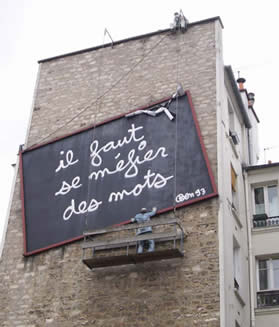
'we need to mistrust words'
For example, business types say ‘human resources’, and commentators say 'individuals', when they mean people; and those who make the decisions talk of ‘environmental management’ when they mean (or do they?) improving our behaviour in relation to the earth. These strangely dissociated terms reveal the alienated, hierarchical attitudes that still dominate our thinking. WMD - Whose Mass Death-Dealers?or: Words of Much DuplicityConsider, too, the breathtaking hypocrisy of the phrase ‘weapons of mass destruction’, and the way it was suddenly invented, and slipped into the language, just when Western leaders were gearing up for the first Gulf War - after 50 years of global nuclear threat from the 'Great Powers'. Hardly anyone commented then, or comments yet, on the interesting timing of the phrase's entry into our vocabulary, and the inherent double standards - and capacity for self-deception - it reveals. Our supposedly critical and sophisticated news media swallowed this new phrase whole, and have served it up to us over and over again since 1991, with no sense of irony. Throughout the prolonged, world-threatening nuclear stand-off of the Cold War – the euphemistic term 'nuclear deterrent' was preferred. Such a brutally truthful description was never applied to Western (or Soviet) nuclear and chemical weaponry, and to this day Western commentators use the phrase 'weapons of mass destruction', and its acronym WMD, exclusively to describe the weapons of states we look down on. It is rarely - if ever - used to describe our own. It seems obvious that this new, quite accurate phrase has been coined so that the West has a handy name at the ready, to describe anyone else's (not us - not US) ‘defence’ ‘ordinance’ – perhaps because it seems increasingly likely that we will sooner or later lose our global pre-eminence, and thus our ‘authority’ to police the world? I wonder what we will call China's nuclear arsenal, once they get into their military stride? Filling the AirwavesOne of the ways the West now invades and dominates the peoples of the world is through our news and entertainment media. Many people still feel queasy when we are made to view in close-up the terror or starvation of people far away from us, or when shocked and grieving people, near and far, have microphones pushed at them so that we, the viewers, can be ‘moved’ by their pain.
But gradually, more and more boundaries are breached, by television and journalism – and, of course, these days by the new communications. It feels to me like we are expected, trained even, to override our natural sense of where the correct boundaries lie between people, and what constitutes humiliation, emotional abuse, or creepy, prurient interest. Ironically, this insidious desensitisation of Western consumers of news and entertainment is happening at the same time as our culture is becoming more aware of the nature of sexual and emotional vulnerability, and as our understanding of the subtlety of psychological damage is deepening. In fact, of course, the two processes - of desensitisation, and of increasing sensitivity - are horribly interlinked. Indeed, everything important we learn in the West is instantly at the disposal of the commercial system that runs the show -
– through management consultancy, advertising and PR, as well as through the news and entertainment industries, including fiction writing and pornography. And of course, the era of Western world domination, and hence of Western complacency and obliviousness is far from over! For we still, apparently, feel entitled to preach to the rest of the world about how to behave, we are still telling ourselves stories that put a self-justifying spin on our history, and glossing over huge areas we'd rather not look at (such as our long-standing, trouble-making role in the Middle East, in Africa, and in China).
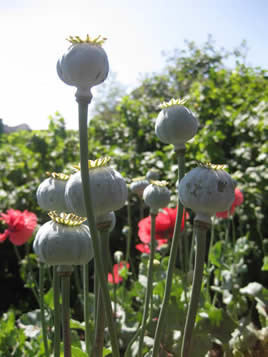
poppies - opium - opium wars Things are changingBut things are changing in the world – they always are. Conditions that seem set in stone can be suddenly transformed from within. Surprising and unforeseen events continue to unfold (1989, the liberation of South Africa from apartheid, the destruction of the Twin Towers and the wars that have followed, the financial crash, the Arab Spring), and we in the world's most recent imperial culture will increasingly have to learn to read the writing on the wall.
Getting itComing to appreciate the help contained in events that at first seem difficult and hostile is one of the valuable lessons of developing self-awareness. In our individual lives, as well as in the wider political and social arena, it often takes a crisis to bring us to our senses.
I have found I can make the best use of life’s shocks and setbacks by asking myself what these events are showing me, or trying to show me, about what I’ve been doing wrong. I believe we in the West are now beginning to emerge from several centuries of deepening, world-conquering hybris. History is just beginning to humble us - politically, financially and economically - so we can start to feel and acknowledge the wide-openness and non-hierarchical nature of reality. The inner truth is threatening to ego, with its goal-oriented approach and desperation to control everything. We can expect backlash and panic, along with liberation from our arrogance and blindness. Everyone, and every people, is of equal worth and significance. We Westerners are not the world’s God-given leaders – and there is no white man’s burden, except perhaps to develop and bear a clear awareness of what our culture has done.
|
home | intro | fear | egoland | miscellaneous | the heartland | writing reflections | psyche | culture | on the way | sentences | wordplay |
|
updated 19/2/12 |
|