Dealing with Ego
I find that by practising dealing with my ego - by learning to notice (know 'tis) when ego infiltrates my thoughts and attitudes, and resisting it, I have gained in self-acceptance, flexibility and freedom to enjoy life.
In fact, not that much resistance is necessary, once I've managed to see through ego's disguise of the moment. For it relies on remaining unnoticed, banking on my natural reluctance to acknowledge anything murky or untrustworthy in my own thinking!
A few of my own ego's favourite attitudes are: righteous critic, outraged champion, and reproachful victim.
I need to spot it and stop it, whatever role it's playing. By doing this, I practise being trustworthy to myself, in private, out of sight of others.
Everything else follows from this alignment of my will with my true self, with my heart.

As I have learned to deal with - and not to be overwhelmed by - the central issues that unsettle me, I have also been practising steering a 'middle course', aiming for neutral, and trying to keep clear of both false comforts and defeatism.
SONG: Over we Go
Ego in the Restless Mind
Hope, the fantasist, may offer to build me a castle in the air – an illusory ‘solution’ to some problem, real or imaginary. Such mental activity and ego-tinged emotion acts as a smoke-screen, keeping me from seeing what actually needs to be done.

Or ego, the fabulist, will (if I let it) tell me tall tales to explain and justify - or to argue with - what’s going on, and make me look good – or bad – to myself: anything at all to keep the pot boiling, and keep me off balance, and wistfully, desperately striving to improve things.
(It helps to notice how arbitrary ego's sallies are - they come from different directions, and the arguments can contradict one another vehemently. Their only purpose is to unbalance us, to arouse fear and a feeling of ego-dependence. There is no reality check, no true north, to ego's reasoning.)
All such mental efforts only feed the ego dynamic in the situation.
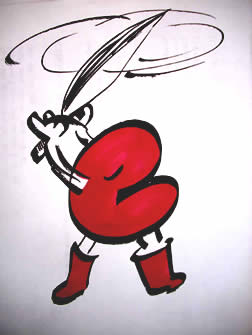
I need to keep remembering to resist these myth-making impulses, and to avoid collapsing into negativity and hopelessness, giving up on things, and writing people off as ‘not worth the trouble’ and ‘just malicious’.
It may be necessary to withdraw from situations, but I need to step away neutrally, leaving the door open, and not storm out, slamming it shut behind me – which excites ego. (Vehemence is an energy booster for ego.)
swashbuckling ego
Ego’s Door-Openers – Pain and Pressure
I have noticed two factors that make me particularly susceptible to ego, two kinds of inner difficulty that I need to attend to, on my way to the Heartland: hurting, and feeling under pressure.
These two elements are distinct, but linked.
In simple terms, from my own self-observations, I would say: hurt comes from feelings, while pressure comes from error, or ego.
Hurting can come from grief, over loss – from a sense of betrayal or disappointment, an experience of abandonment, or from feelings coming to the surface from the past. This hurting can arouse fear, and with fear comes ego, ever eager to provide ‘solutions’, escape, or ammunition.
If I listen to these 'helpful' suggestions, ego needs no second bidding - it quickly assumes control of my thinking and feeling, and will send me off on fool's errands, in any direction but the right one – for the last thing ego wants is a resolution to any problem.
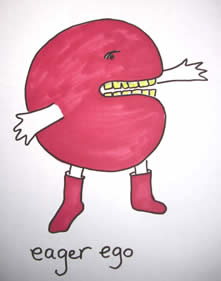
When I am hurting therefore, I have learned that the thing to do is to feel my hurt - let it speak to me, and guide me towards what I really need. My feelings require time and gentle attention to be felt and allowed to pass. Then, when the feeling has done its work, the feelings can be released - and they are. They just go, vanish- job done.
This feels like magic, but it is just the way our body/mind naturally deals with experience, when it's not blocked and hampered by ego interventions.
My feelings are my delicate, appropriate and necessary responses to the real events of my life, they are my trustworthy guides, and are not to be swept aside or belittled.

Seeing clearly how unnecessary and unhelpful are ego’s offers of ‘help’ and interventions – sensing, noticing what ego is really up to, and understanding my susceptibility to its ruses – all these are helpful and steadying to my true self.
I feel supported by my recognition of what’s happening. This insight may not make me immune to ego’s gambits (to be immune may be to be inhuman!) but it strengthens my psychological immune system, and supports me in my resistance to ego-infection.

The sense of being under pressure, on the other hand, may have different causes. Stored, repressed feelings generate pressure in the psyche; and ego itself is constantly seeking to generate pressure, as a potential power source.

The image of pressure being a power source for ego can also be applied to the Western (and increasingly, worldwide) money-driven, mechanical and technological approach to the earth.
Our long-standing Western assumption that we are entitled to wring everything we can from this planet, to increase our power and control, is very like ego’s attitude to the psyche.
(with apologies for the glitsch in the song)
Ego and reckless consumerist culture are both parasitic predators on reality, and both undermine and destroy the living things they exploit.
The fact that I am typing this on my new (and already beloved) laptop adds irony, and a certain smile, to my rhetoric.
Pressure and the Ego-bound Psyche
At one extreme, the psyches of the ego-bound are under constant inner pressure, although the ego-bound themselves may not be conscious of being inwardly bullied by their out-of-control egos.
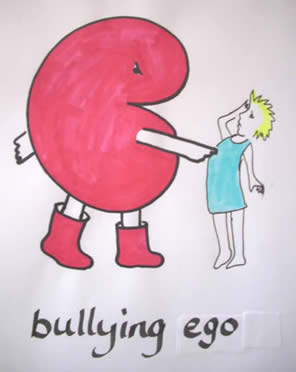
Moment to moment throughout their lives, a person in thrall to his or her ego must maintain a self-image and a skewed version of the world intact, in the face of all the jarring consequences generated by their off-centre attitudes, and by the demands they make on others.
Everyone around such a person is pressured to play a game, and to betray themselves, in order to allow the rampant ego to continue in unconsciousness, unhampered by self-awareness.
Even the person controlling those around her- or himself has no inner space or freedom - though, again, they may be unaware of the fact - as their own real feelings have to be continually damped down, turned around, and scrambled into some strategic nonsense.

Such extreme pressure within the psyche often leads into what we call mental illness. But many ego-bound people go through their lives without diagnosis, externalising their own (unfelt) inner discomfort, drawing family members and friends into their games, and allowing ego (in themselves and in others) to feed on the distress, frustration and self-betrayals of those who feel obliged to continue to interact with them, and to care for them.
The inner pressures in an ego-bound psyche, which feed ego and on which it grows monstrous, have their origins in some deep-seated fear, some unacknowledged pain that has been buried, along with the person’s true self, rather than faced.
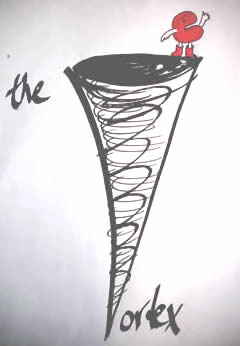
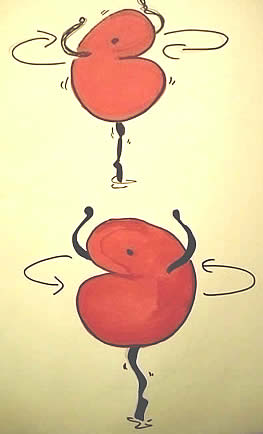
In the egosphere, we can expect reversals and mirrorings, and one of the ego-indicating reversals here is that the only person unaware of the misery and destructiveness of such a scenario is likely to be the one at its twirling epicenter, the main misbehaver.
Another form of ego reversal is the sleight of hand involved in ego's externalising of discomfort. This is when person A requires person B to feel something (anger, hurt, panic) which A doesn’t wish to feel, although the unwanted feeling originates in the psyche of A and nowhere else.
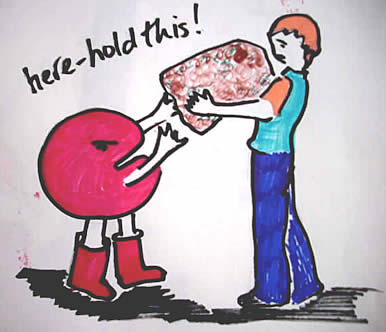
The instruction is issued unconsciously, of course (all the better for deniability) – and, unfortunately, many people who are kind, or scared, or both, do just that. It has probably happened to all of us - we come away from an encounter feeling oppressed, confused, as if someone had slipped something into our drink.
And, this being Egoland, this is where things get complicated. If the one being ‘handed’ another’s discomfort accepts the poisoned parcel, and so feels bad, constrained and confused, then a vicious cycle is set up, and the ego-bound 'giver' (of their unconscious discomfort) can watch his or her target squirm, and feel superior, untroubled – ‘above it all’.
But also, if the receiver allows his or her own ego to sign for the unwanted parcel (‘Let me take care of that’ is one of ego’s catch-all passwords) then the receiver’s self-image (as put-upon, selfless martyr, or just ‘the sensible one’) may be boosted by the transaction – perpetuating the game.
Another possibility, which again feeds ego, is that the one infected by someone else's unwanted discomfort is bounced or jostled into his/her own fear and resentment, and goes off down one of his/her own ego rat-runs.
When someone makes a burden of themselves for others to carry and worry about, and endure insensitivity from, then that person’s ego is growing fat on the situation, and it is up to the ones imposed on to stop feeding their own life energy to the monster.
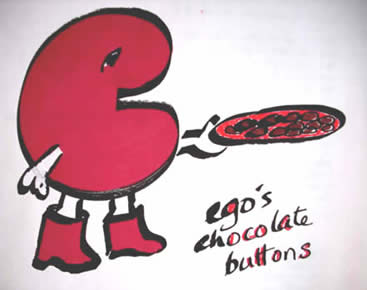
This means learning to do without the ‘brownie points’ their self-image (ego) receives from being the Rescuer, and also, to resist their own (ego-ruled) dread of ceasing to exist, if they step away from the game - a game which is exhausting, confusing and destructive, which perpetuates conflict and self-conflict, and is entirely unnecessary.
People sense what they can get away with. When we cater to ego in others, we nurture the monster in them and in ourselves. Being strict with ourselves, conscientious and truthful, even out of sight of others, gives ego nowhere to hide.
Any aspect of my mind which I’d rather not see, or know about, is a place for ego to flourish.
Inner pressure release (real ease)
I have observed with astonishment, over the past twenty years or so, the gradual lowering of pressure in my psyche – pressure of which I had been almost unaware, until I noticed its absence!
But there have been moments, over this same period, when I have been conscious of various kinds of physical pressure, which I am sure arose from my psyche. I felt the first tightness as a painful knot in my stomach, at a nine-day silent retreat in the mid-nineties - and for months thereafter, whenever I sat quietly.
A year or two later I felt pressure intermittently in my solar plexus, and later still, once or twice only, in my chest. More recently I have felt it in and ‘around’ my head. (I have only noticed the interesting order of occurrence in writing this passage!)
I experienced these different pressures in my body at times when I felt embroiled in situations I had come to see were untenable or incorrect, but had not yet found my way out of.
Becoming aware that something feels wrong, or that we seem to be involved in a negative habit of behaviour, is a crucial step in transformation. Even to realise that there is something we don’t want to feel, or face, is already to honour the reality of our feelings.
The sense of something unwanted approaching – whether in the form of other people’s behaviour, or of our own emerging feelings - is a frequent source of inner pressure, and while this can be uncomfortable, and even distressing, as long as we remain aware of what’s happening, we won’t be trapped in a treadmill of resistance and ego kickback.
When we have the courage to feel them, our feelings themselves are our best healers, bringing us back to ourselves, to reality.
I have learned from experience that feeling such pressure as a physical symptom is a sign of something about to be released, let go of. When my body registers its discomfort with the way things are in my psyche, and/or in my behaviour and relationships, I believe it is a sign that I have given it permission to express itself, and speak to me.
The psyche is extremely sensitive to any hints we give that we are open to receiving its signals. If we become interested in our dreams, for example, we will usually start remembering them more clearly.
If we are willing to be guided, we will be guided.
SONG: If we are willing, we will be able
Ex-trick-a-tion
or: making tricks a thing of the past
or: getting out of tricks (games)
Dealing with Ego is a process of self-extrication, a term which can be taken in two - interconnected - ways:
1) extricating myself from untenable, ego-tinged situations and associations in which I find myself entangled; and
2) extricating myself from ego's scripts and falsehoods, the self-undermining pain-makers that are hiding in my own mind, and infecting my attitude to life - by unfolding what’s in here, laying it out flat, by admitting - not concealing, or evading - whatever I can sense to be happening, however unworthy or 'shameful'.
I need to accept my own feelings, whatever they are.
In this connection, it is good to remember that it is always helpful to acknowledge the truth - even, or rather, especially - when the truth is difficult to admit, because it clashes with how I like to see myself!
Since I have learned the liberating effect of being honest with myself and resisting ego's suggestions for short-cuts, 'easier ways' or 'not bothering', I feel encouraged, any time I spot something sneaky or unpleasant going on in my mind, to 'out' it - admit it frankly to myself.
I find that doing this brings an immediate sense of detachment, and often humour, a kind of self-forgiveness. These are not capital offences, as ego likes to imply!
Also, once I admit to a shady feeling, I often learn something new about why it's there - see something underlying it that I hadn't noticed before. There may be some hidden spur underlying my mean thought, some unacknowledged sense of injury or injustice that needs to be attended to - there will be a reason, a sufficient cause, for whatever has been sparked off in me.
In fact, I have learned that the worse I feel about something I spot going on in my mind, the more I stand to gain by admitting it to myself.
'Outing' these ego-tainted impulses doesn't mean disowning them - on the contrary, it means owning up to them: 'it's a fair cop'. I am, after all, both cop and culprit. This is between me and myself, and no-one else needs to know. But I do need to know.
Song: Ilanga Mo, with acknowledgement of source
Dealing with Ego in Others
Dealing with ego in others is tricky – for at least two reasons. The first is that ego in me is highly interested in putting others right.
My ego loves to present itself as judge and critic, or wronged victim, or wise and superior guide. This truth about the human psyche is perfectly described in Jesus’ drily humorous image of the one who kindly offers to remove the speck of dust in his neighbour’s eye, when he can barely see for the plank in his own.

It is also tricky, when I sense an ego-driven approach coming at me from someone else – for besides my own ego running to meet any suspected traitor or foe, with eager (ego) daggers drawn, I may well be, at this moment, in the presence of something unconscious, and therefore denied, in the other.
Nothing is to be gained by any response that arouses a further ego reaction. And I can be sure that when some such approach is made, the other person, however they are presenting themselves, is actually feeling fragile and insecure. People in thrall to their egos may be insensitive to the feelings of others, but they themselves are extremely touchy.
The above remark about touchiness has certainly been true of myself, and probably still is!
Ego and Persona
I know from my own experience, for myself, that it's been when I've been feeling insecure or inadequate that I have felt the need to build a carapace of pretended confidence around my heart –

something to impress others, and keep them at bay. In psychological (Jungian) terms, this is called our persona, and it is a completely normal and perhaps even 'healthy' way for Western teenagers to enter adult life.
But my persona is not the same thing as who I am, and as long as I depend on my self-image in order to interact with the world, I must remain, to some extent, estranged from myself.
It seems to me that many people in our culture remain reliant on such fictional, self-protective fake identities all their lives.
One of the problems with these ego-designed masks is that they are usually the exact opposite of how we actually feel, on the inside.
After all, they've been designed to mislead the world, and to disguise from ourselves what we fear is the truth about ourselves!
As someone wisely put it: the bigger the front, the bigger the back. The more sure of myself I seem, the less sure of myself I probably am, at heart.
All such fakery boosts ego, and the ego dynamics in the lives of people who depend on their personas. Ego profiteers on suppressed discomfort – it turns things around, making out that the ego-controlled one is 'fine', in the right, in charge, innocent of all error, and any problems are all to do with 'the others'. And then it feeds on other people’s negative responses to this objectionable behaviour!
Ego is utterly shameless.
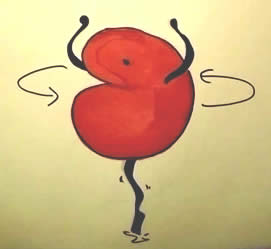
ego's 180 degree turnaround or reversal
For sanity's sake, we have to find a place to stand where we can laugh at its shenanigans - including the ones that still go on in our own minds and hearts, for all our understanding of them.
It is interesting to notice that the English word live, turned around, turns into the English word evil - and that the word truth, reversed, turns (nearly) into hurt. Once ego is aroused, true things can be said in an untrue spirit, in order to hurt - falsifiying them.
The Futility of Ego Reversal
In fact, the very ‘rewards’ ego offers – of not feeling pain, of appearing powerful and confident and attractive – actually contain punishments, which people inflict on themselves by accepting ego’s lies and false comforts.
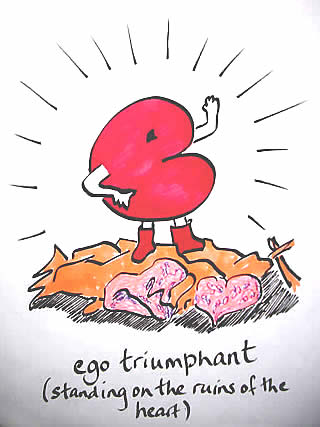
Under ego's anaesthetic, I cannot feel my own feelings, and so am made homeless in the world. Besides, a falsely confident persona arouses hostility, envy and other inappropriate responses in other people, responses which don't nourish us, and which further inflame ego.
Fear can become the only feeling we have - and its adrenaline-like rush our only way of feeling fully alive.
By allowing ego into our psyche, we exclude ourselves from our own Heartland – our true inner home.
|