Clarity, and Truth
(a quality of the Heartland, and an embattled concept)
When clarity comes, I can sense the just-is-ness of the way things are – without resistance. I am released - at least for the moment of clarity - from inner pressure, from the impulse to escape, or to wrestle with the way things are.
Clarity shows me, in glimpses, that (and how) everything is dealt with, how reality is self-correcting, or self-punishing - I don't need to intervene, or try to be heard - I can simply respond to events, as long as I keep attending to what's going on within me.
Coming into clarity, I sense that – despite appearances - nothing goes unnoticed, or unattended to, in the inner world.
Realising this means I am less easy prey to ego’s promises and offers of assistance: it allows me to feel my way through tricky situations more calmly, and to check any ego-sponsored overreaction.
When events throw up difficulties and disappointments, I often fall back into old, ego-expanding fears - fear that it is all too much for me, that my feelings may not be attended to, that I will have to go round and round again in this frightening place, without help.

Gifts of Clarity
When clarity comes – when I calm down enough to hear its quiet voice – I feel my own capacity to deal with whatever feelings I am having, to listen to them and learn from what they are telling me about myself and about others, about what’s really going on in my life, and what’s unsettling me about it.
In the Heartland, when I have clarity, I am given a wide-angle view of my life, and enabled to accept consciously more and more of my experience, without being bounced by fear into resistance or reaction – without feeling I have to resort to blame or self-justification, without falling into self-pity.
Accompanying this increasing detachment comes humour – the Cosmic twinkle. When I see something clearly – especially something which has disturbed or oppressed me – there is a sudden sense of release from inner tension which is often close to laughter. I find myself able to enjoy life – even its scrunchy bits - with more heart.
Just savouring the ordinary things in everyday life can be a new experience – home, friends, the view from a window; a sunny day, companionship, music, a good meal, a conversation, the list goes on. In the Heartland, knowing I am taken care of, my heart can open up and I feel grateful - which is a priceless gift of consciousness, and one of the best feelings there is.
Truth - is there such a thing?
The concept of truth has taken a terrible hammering, over the past fifty years or so, in Western culture. This is mainly because it had previously been seriously abused.
We are surely not wrong to be suspicious of those who claim to know, or have 'the truth' in their possession. Successive dogmas claiming to represent 'the truth' (Christianity, Communism, Fascism) have licensed terrible cruelties and injustice.
Gradually, and largely due to the worldwide, dogma-driven excesses of the 20th Century, ideologies have become discredited in the West, to the point where many Western intellectuals have decided to bin the whole idea of ‘truth’.
It is interesting, though, that - at least until the crash of 2008 - Capitalism itself seemed to have escaped the bonfire of the isms! Partly thanks to Margaret Thatcher's (and more general Western) triumphalism over the fall of the Soviet bloc, and partly due to the lack of a Plan B, 'the market' continues to be seen, not as the construct it is, but as a fundamental reality - and the Way to Go.
It seems to me that the current financial mess, together with the deepening ecological crisis, offer history's rejoinder, and Nature's corrective, to our fantasy of perpetual economic expansion, and the biggest challenge yet to Capitalism's credibility within Western culture.
Truth and Perspective
Western thought has only quite recently taken on board the fact that the world looks different to people standing in different positions, relative to an event or events. This goes for groups of people, for whole communities, classes and cultures, as well as for individuals within families or other groups.
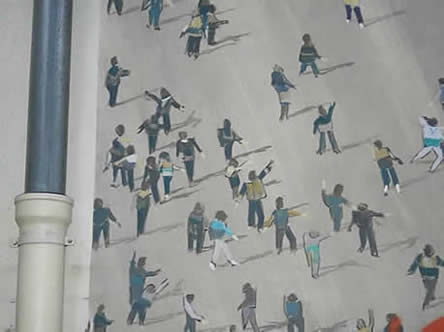
Paris wall art
Each of us has our own specific take on life, and our own path to travel. And each human community has its own take on history, on the events that loom large for it, and the ideas that inform its conversations and self-understanding.
Mutual Respect versus 'Whatever'
So Westerners have – at last – begun to be aware that the Western take on world history and current affairs is not the only one, and might not actually be intrinsically ‘better’ or ‘truer’ than other points of view.
As a Westerner myself, I would say we are still a long way from acting on this dawning realisation, but there are glimmerings of awareness.
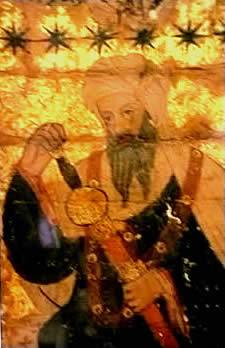
There have been moves towards developing more respectful attitudes to other cultures' values and sensitivities, and learning from their perspectives on our behaviour and values. And although some resent these changes in approach, they continue to take root in our culture, in schools and streets and nightclubs.
However, our now entrenched Western suspicion of overarching systems of thought or belief has led many vociferous opinion-formers to adopt an attitude of (shrug) ‘whatever’, as being the ultimate in sophistication. 'Whatever you fancy / think / believe is just as valid as whatever anyone else does, whatever.'
This statement, in all its agnostic defiance, contains a spark of insight – but I believe there also is something wrongheaded and disheartening about it.
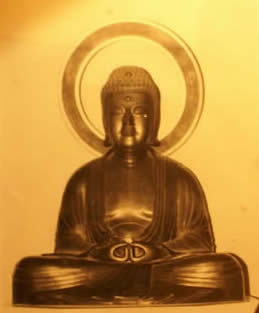
The 'whatever' standpoint is sometimes embraced with a kind of manic excitement, as if the speakers have just escaped from a totalitarian state and discovered the freedoms (and affluence) of the West; other times, it sounds more like a teenager’s gum-chewing, defensive shrug of ‘who cares?’
Digression on Dialectics
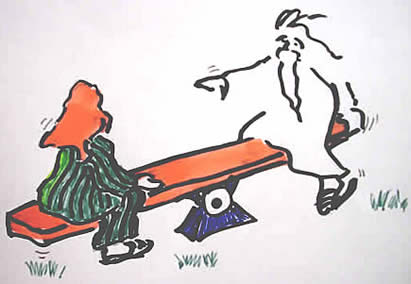
It is interesting to notice how, in the West, art, literature and ideas often ‘progress’ by a see-sawing process of overturning the cherished ideals and beliefs of the previous generation, in the name of truth and ‘modernity’. Whatever the parents held dear is rejecteded by their offspring, so that many young firebrands hark back to their grandparents’ norms.
Hegel and Marx wrote about the dialectical process of history – but the Greeks were already masters of philosophical argey-bargey.
In these Rough Guides I am not trying to pin down 'the truth', or describe ‘what’s what’ in the abstract, or in general. Rather, I am trying to express a kind of truth I have found through my feelings - which I test, and observe as it develops, through experience and practice.
This writing is about how things work, practically - about what works, what feels right and harmonious, and how to discern what works (what is true) from the various gambits and falsehoods that life – including our own mental landscape - is strewn with.
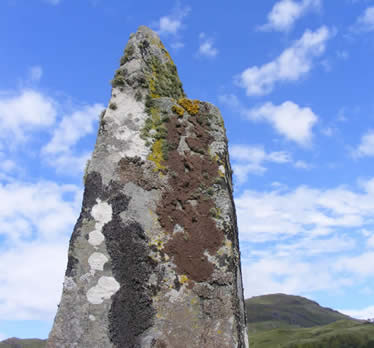
Throwing out the very idea of truth, as it is now fashionable to do, seems to encourage the philosophical equivalent of a shrug of avoidance (or denial). It seems to imply that any distinction drawn between true and false, correct and incorrect, must be purely individual and arbitrary.
This seems to me an unwise, unnecessary – and is surely a highly ego-pleasing - step to take.
I am not saying that ‘truth’ can be stated, encapsulated for all time and applied to all situations. On the contrary - as I mentioned above, this kind of abstract, generalised ‘truth’ (or dogma) has been at the root of many of the worst errors and aberrations in our history - and not only in the West.

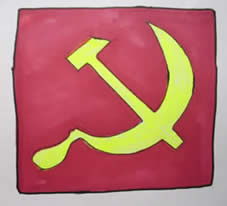
It is good that such idealistic, unrealistic, and desensitising notions of truth have been discredited.
The truth I am describing here is something else altogether.
When I am being true to myself, I feel the difference in my body, viscerally – my energy flows, I feel light-hearted, my voice carries (if I need it to). When I am betraying myself, consciously or unconsciously - feeling compromised or constrained, my body takes the strain – I may get headachy or tense, or feel anxious, or get hoarse. Some people get tummy trouble, or a bad back, or worse.
Truth is practical and physical, and in transformation, moment to moment. It is subtle, and infinitesimally specific.

Here is an interesting thing I have noticed: often, naming something that feels false - writing it down or saying it - removes any power this falsehood has had to disturb me.
However, saying out loud, or writing down, something that feels true can render the feeling and the moment untrue!
It seems that falsehood, to continue to have an effect on us, depends on not being named, while what is true needs no naming.
Whether expressing something betrays it or not depends seems to depend on just how it is spoken or written. This is how specific (and elusive) truth is.
And yet, this delicate, indefinable truth is reliable. Though it may be invisible to us a lot of the time, like an underground river, it emerges again. Truth - reality - flows through us with our breath. We are made of it, part of it. Nothing else really is.
song: Underground River
When I have clarity, reality stills my fears, gets right through to me, and sorts me out. It addresses the core of what needs attention – how I feel about myself, about my own story, about what’s happening around me, and about life as a whole.
With clarity, I feel freed from fearful fantasies, and less susceptible to ego’s games. I understand that any remaining, untended distress or doubt in my psyche provides cover for ego, in myself and in others. I can see how ego-tinged emotions, feelings spun like ping pong (or cricket) balls – can be whacked around, using the energy of my own still-buried feelings - to catch me or someone else off-balance, and bounce me or them into defensiveness.
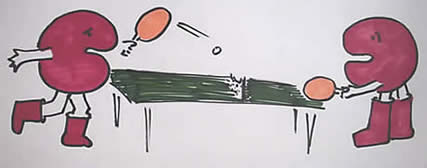
Clarity comes with detachment.
Once I am no longer overwhelmed by my fears and hooked in to ego's strategies for 'winning', I feel free enough to see clearly what before I was trapped inside, and what was trapped inside me. These fears and habits can now be released into the past.
Whatever scripts were playing in my mind, constraining me and contaminating the atmosphere in my heart, I can see (when I have clarity) are not-me. They are quite distinct from who and how I am, they are just bad habits, misleading, unnecessary and destructive – in other words, false.
song: clarity and peace
Seeing things clearly
Clarity doesn't feel like an intellectual act - like grasping an idea or concept, or understanding an argument. Increasing clarity feels more like developing inner flexibility, becoming a dancer, or an actor, freeing up the inner body, to be able to move in different ways, to make new gestures, find new ways of balancing, expressing, stretching, curving - and sensing the space around us.

Actors have to learn to make new inner movements, in order to portray different characters, in different - often extreme - situations. Acting is an inner art, based on self-awareness.
Once we become aware of our own feelings, other people also become easier to read and understand. Empathy aids understanding. Without empathy, people are opaque to us, and often frightening.
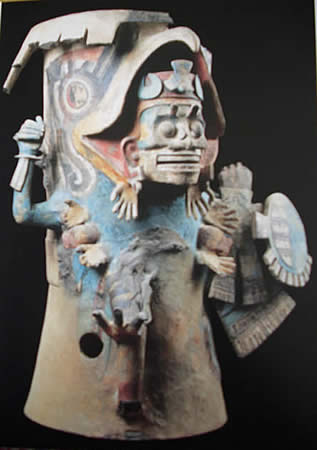
Receiving an insight can be a kind of inner enactment of an attitude, like a role-play, in which I adopt a possible posture, or motivation – perhaps about a situation I've been involved in, but taking a different position.
Detachment facilitates empathy, renders it safe. Once I am no longer cowed by my own fear, I can afford to empathise with people - and parts of myself - I may have felt oppressed by.
|