|
 |
What Writing has meant to me.
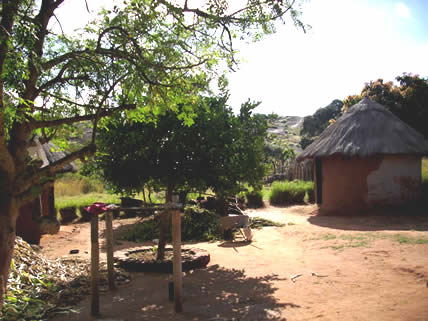
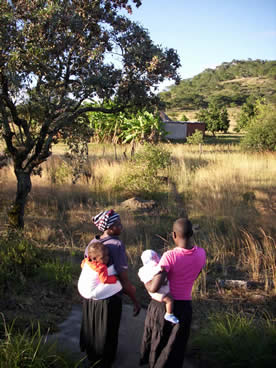
During my student years in Edinburgh in the 1970s, I enjoyed writing but could not imagine myself being 'a writer’. This was because I thought of a writer as someone who invents things (fictions); whereas I believed I would always need something real to write about - by which I meant something outside myself. (Apparently, I was not yet 'real' to myself!) In those days I focussed on German drama - other people's plays - to unlock my own responses and thoughts. I had been writing songs from the age of fifteen, but couldn't make up stories - so I thought I must have a ‘critical’ mind, as opposed to a ‘creative’ one. I simply overlooked my songwriting. Culture Clash and CreativityThen, when I was living in Africa in the 1980s (as a rural secondary school teacher), I found myself full of issues and feelings I wanted to write about, in response to the weird power relations I became aware of in Zimbabwe, going on between Africa - as represented by the people I was living among - and my own Western culture - as represented by myself. Whether I liked it or not, to the rural Zimbabweans around me I stood for the West - the place of dreams and aspirations. This felt extremely uncomfortable. Something similar has happened to many Westerners in other parts of the world, and indeed it has turned them into writers - from George Orwell, through Graham Greene to Paul Theroux. And, the 'other way round', writers from 'other parts of the world' like V.S. Naipaul and Vikram Seth have become writers through their encounters between their own cultural starting points and the West. Perhaps this creative outcome happens because, when we find ourselves living in a different culture, the clash between what is in our own minds and what seems to be going on around us opens up a space of what Zen teachers call 'beginner's mind'. In my own case, the post-colonial situation of Zimbabwe just four years after their war of Independence, and the ideology of ‘development’, for which I (as a British ‘volunteer’ teacher) was an embarrassed flag-bearer, gave me more than enough to get my teeth into. Who's 'Ahead' in the Human Race?Although the fantasy of the West's desirability over other ways of life is at least as prevalent here in Europe, or in the US, as it is in Africa,
it is harder to spot here in the West, being simply the cultural air we breathe, reinforced by most of what we read and see around us. Our view of other parts of the world is subtly (and less subtly) skewed by our largely unquestioned belief that the West is 'ahead' of other societies in important ways, indeed, in the aspects we value about our culture - economic, technological, military and educational advantage, for example.
To me, turning thirty, and suddenly finding myself in a very different cultural setting, whose distinct qualities, values and dignity often seemed to me to show up the craziness and unhappiness of our Western ways, this assumption of Western leadership felt jarring, even shocking, .
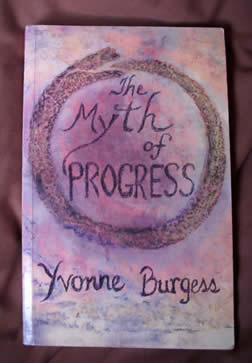
Looking Out and Looking InWhen I began to write about these things, in the 1980s, I described my writing, for want of a better term, as ‘cultural criticism’. (See The Myth of Progress, my only published book.)
It felt like a breakthrough, when I realised I had more than enough 'real' material to work with, in the strangely skewed power relations I found myself negotiating as a European 'volunteer' in Zimbabwe, and my gut-level responses to these, which I found troubling and which sometimes got me into trouble. Looking back now, I can see that I was using the situation I was in, with its 'real-life' issues and contradictions, like a rear-view mirror on my own thoughts and feelings. I could only focus out the way, on what I saw and felt happening around me, or between myself and others. I could not yet look in the way, or feel my own feelings clearly or directly. Now, nearly thirty years on, I find that once again I have more than enough to write about – to try to express. Gradually I have learned to look 'in the way', and to feel what's going on in my own awareness - using my outer and inner senses, so that in these 'Rough Guides' I am able to focus on 'places' and 'things', conflicts and issues I was only dimly aware of earlier: the movements of the mind, shifts in attitude, and the consequent states of the heart (feelings). I have slowly learned both to observe my own mind and feelings, and (which is more to the point) to take more responsibility for what goes on in here - always with help, which I try to remember to ask for. And as I have slowly made this journey towards becoming more self-aware, I have become convinced that levels of inner openness and integrity matter crucially, for how events actually proceed, both at the personal and the public, political level.
Human history originates in the human heart. Thinking about what writing means to me now, I savour the spreading feeling of rightness (writeness!) when I manage to say what I mean – rather than resorting to resounding rhetoric, or accepting an off-the-peg phrase handed to me by ego (like the ever-obliging suggestions of predictive text).
Being true to this present momentis the thing that makes me feel alive.
|
 |
|
home | intro | fear | egoland | miscellaneous | the heartland | writing reflections | psyche | culture | on the way | sentences | wordplay |
|
updated 19/2/12 |
|